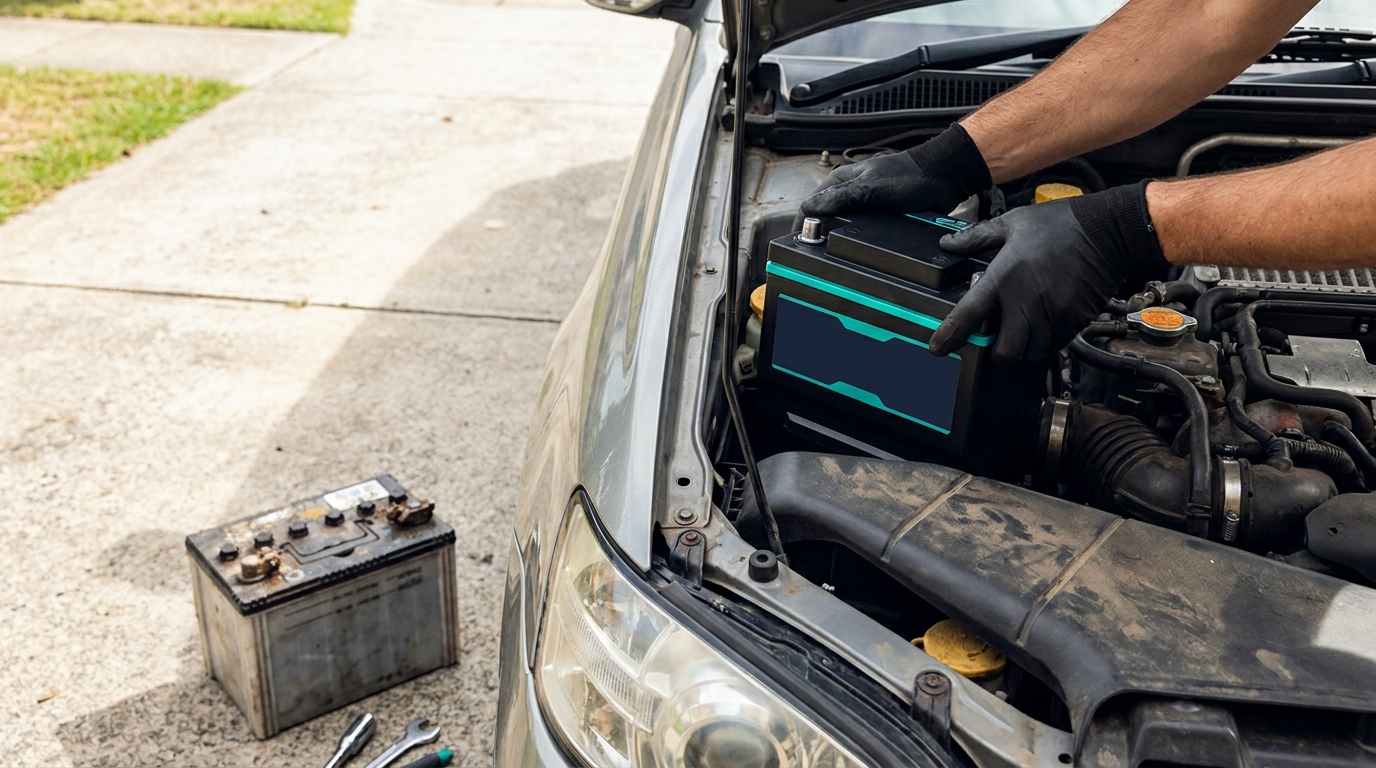
Yes. A 12V sodium ion battery is designed as a direct drop in replacement for a lead acid starting battery. It uses the same voltage, connects to the same terminals, charges from the same alternator, and needs no wiring changes, software updates or workshop visit. The only real checks are physical size and terminal orientation, which is the same check you would do swapping between two lead acid brands.
Why People Ask This
Every car owner who has heard about sodium ion batteries eventually asks the same practical question: can I actually replace lead acid with sodium ion, or is this one of those upgrades that needs a mechanic and a modified engine bay. It is a fair thing to check before spending money, especially with a battery type that is still new to most Australian driveways. The good news is that a sodium ion starter battery is built to the same starting, lighting and ignition (SLI) standard as the lead acid battery currently under your bonnet. It is not an EV traction battery and it does not need a specialist to install.
What Actually Has to Match
A lead acid to sodium ion swap comes down to three things, the same three things that matter with any battery replacement.
Voltage. Both are 12V systems. A sodium ion SLI battery runs a nominal voltage around 12.4V with a max charge voltage of about 15.8V, well inside the range your factory alternator and voltage regulator already expect.
Physical fit. The new battery needs to sit in the existing tray and be held down by the existing clamp, with terminals close enough to reach your battery cables without straining them.
Terminal polarity. Lead acid batteries come in left hand positive and right hand positive layouts depending on the model. Check your current battery's terminal layout against the replacement before ordering, not after.
Lead Acid vs Sodium Ion: What Changes and What Does Not
| Factor | Lead Acid | Sodium Ion |
|---|---|---|
| Voltage and charging | 12V, standard alternator | 12V, same standard alternator |
| Installation | Bolt in, no tools beyond a spanner | Identical, bolt in |
| Cycle life | 300 to 500 cycles typical | 3,000 plus cycles |
| Cold cranking amps | Baseline | Higher CCA at the same or lower weight |
| Weight | Heaviest option | Up to 40 percent lighter |
| Maintenance | Can sulfate, needs occasional check | Maintenance free |
| Extreme heat tolerance | Degrades fastest in Australian summer | Rated to 70°C discharge |
| Special wiring or BMS setup | None needed | None needed, BMS is built in |
What Does Not Carry Over
Two things do not automatically transfer from your old lead acid battery and are worth checking rather than assuming. First, exact case dimensions vary between brands and models even within the same nominal group size, so measure your battery bay rather than relying on a lead acid group size chart alone. Second, if your vehicle has a genuinely unusual charging profile, such as some European makes with smart charging systems that vary output based on battery state of charge, it is worth a quick check with SaltyCells before ordering, though the vast majority of Australian passenger vehicles, utes and 4WDs run a standard charging system that a sodium ion battery handles without issue.
🔋 Recommended: The SC-NA1270-280
SaltyCells sells three sodium ion SKUs, sized to cover the range of lead acid batteries currently on Australian roads. The SC-NA1270-280 is the most common fit across mid sized sedans, SUVs and utes. Smaller passenger cars suit the SC-NA1260, while larger diesel utes, wagons and higher demand accessories suit the SC-NA1280. All three carry a 5 year warranty and are rated for 3,000 plus charge cycles, roughly 6 to 10 times what a lead acid battery delivers.
30Ah · 650A · 4.5 kg
50Ah · 860A · 6.5 kg
60Ah · 900A · 6.0 kg
For the full technical picture on how the chemistry differs, see our guide to what a sodium ion battery is, or read the side by side case for switching. When you are ready to fit one, our installation guide walks through the process step by step.
Frequently Asked Questions
No. It is the same bolt in process as replacing any 12V lead acid battery, and most owners can do it themselves with basic tools. See our installation guide for the full steps.
No. Sodium ion SLI batteries are designed to charge within the same voltage window as lead acid and use a built in battery management system to manage the charge safely.
No reprogramming is required for a standard 12V starter battery swap. Some vehicles with a battery monitoring system may briefly show a fault light until the system recalibrates, which typically clears itself within a short drive.
Match Ah capacity and case dimensions as closely as possible to your current battery, and check terminal polarity before ordering. If you are unsure, contact SaltyCells with your vehicle details.
Many owners wait for the old battery to fail, but since a sodium ion battery lasts several times longer and performs better in Australian heat, replacing it proactively avoids the risk of being stranded and pays off over the life of the vehicle.
The Bottom Line
For the vast majority of Australian vehicles, replacing a lead acid battery with a sodium ion battery is a straightforward bolt in swap, not a workshop project. Match the size, check the terminals, and you get a battery that lasts years longer, handles Australian heat better, and needs zero maintenance. Browse the SaltyCells range to find the right fit for your vehicle.