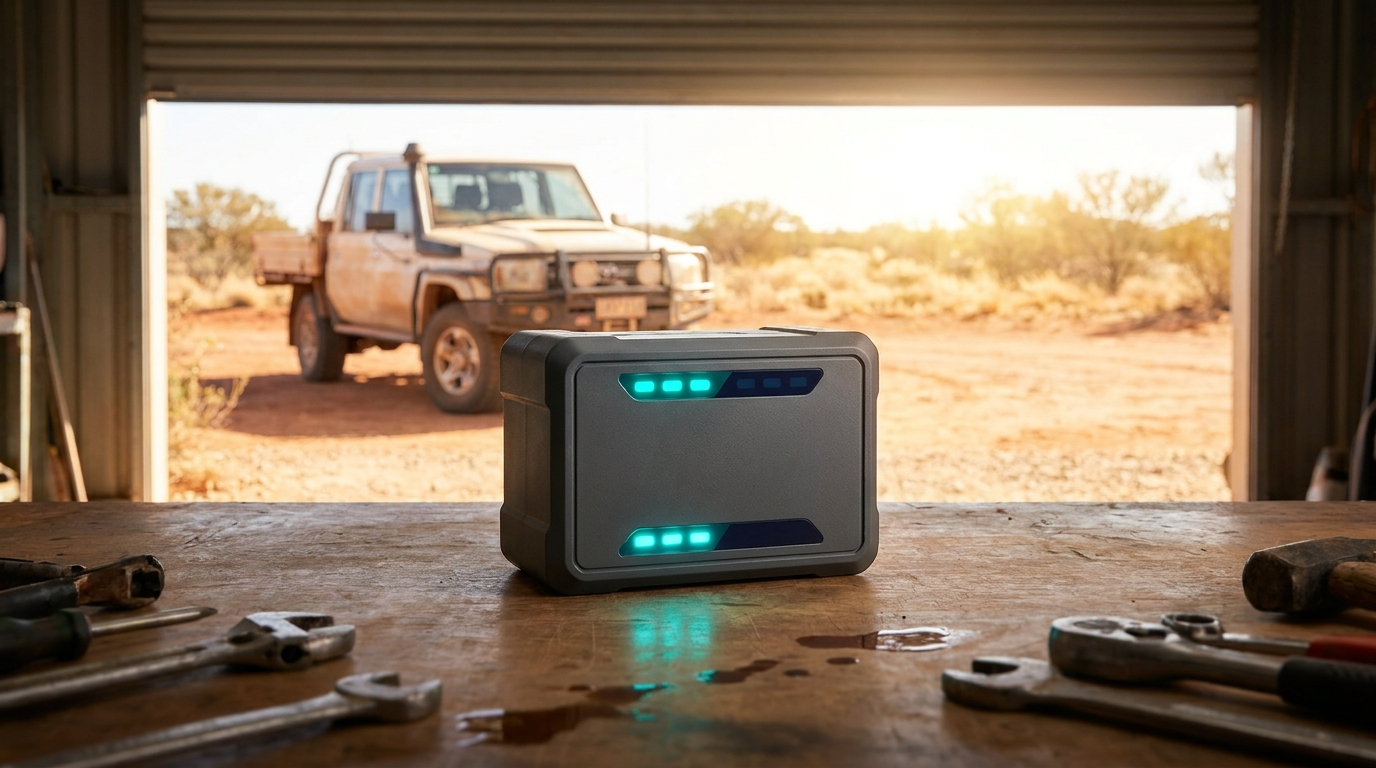
A quality 12V sodium ion starter battery lasts 3,000 or more full charge cycles, which works out to roughly 8 to 10 years of typical daily driving in Australia. That is 3 to 10 times the cycle life of a lead acid battery, which usually taps out at 300 to 500 cycles or 3 to 5 years. SaltyCells batteries carry a 5 year warranty and are rated for at least 3,000 cycles at 60 percent depth of discharge.
Why Cycle Life Is the Number That Actually Matters
Every battery ad talks about years. Years are a guess. Cycle life is the real number, because it is a lab measured figure: how many times a battery can be fully drained and recharged before it drops below 80 percent of its original capacity. A car that gets driven daily uses roughly one cycle a day, so 3,000 cycles works out to about 8 years even under constant use. Sit in traffic with the aircon and stereo running all day and you will burn through cycles faster than that, which is exactly the scenario sodium ion handles better than lead acid.
Lead acid batteries in the Supercheap Auto or Repco aisle are typically rated for 300 to 500 cycles. That is why the average lead acid battery in an Australian car dies in 3 to 5 years, often sooner in Queensland or the Northern Territory where summer heat accelerates the internal corrosion that kills lead acid cells early.
Sodium Ion vs Lead Acid vs Lithium: Cycle Life Compared
| Battery Type | Typical Cycle Life | Real World Lifespan | Heat Tolerance |
|---|---|---|---|
| Lead acid (AGM/flooded) | 300 to 500 cycles | 3 to 5 years | Degrades fast above 35°C |
| Sodium ion (SaltyCells) | 3,000 or more cycles | 8 to 10 years | Rated to 70°C discharge |
| Lithium iron phosphate (LiFePO4) | 2,000 to 5,000 cycles | 7 to 12 years | Good, but thermal runaway risk in extreme heat |
Sodium ion sits right alongside lithium on cycle life, without the thermal runaway risk that makes some insurers nervous about lithium starter batteries. That is the trade Australian drivers are making when they upgrade: lithium level longevity, lead acid level safety and price.
What Actually Shortens or Extends the Life of a Sodium Ion Battery
A cycle life rating is measured under lab conditions. Three things move the real number in your driveway.
Heat is the biggest factor for any battery chemistry, and it is the one place sodium ion pulls ahead. A SaltyCells battery is rated to discharge in temperatures up to 70°C, well above what a lead acid battery can handle before it starts cooking its internal plates. Parked in the sun in Alice Springs or Broome in January, that headroom is the difference between a battery that shrugs it off and one that is dead in 18 months.
Depth of discharge matters too. Cycle ratings like "3,000 cycles at 60 percent DOD" mean the battery was drained to 60 percent and recharged, not run flat to zero every time. Starter batteries rarely get fully drained in normal use, which is one reason the real world lifespan usually beats the lab number rather than falling short of it.
Charging behaviour is the third factor. A sodium ion battery does not need a maintenance top up charge the way an old lead acid battery does, and it does not sulfate from sitting unused, which is a common cause of premature lead acid failure in vehicles that only get driven on weekends.
How This Compares to What Is Fitted in Your Car Right Now
If you are driving a HiLux, Ranger, Prado, or any daily driver on a factory lead acid or AGM battery, you are on borrowed time somewhere between year 3 and year 5. A sodium ion drop in replacement resets that clock and roughly doubles it, with no wiring changes and no ECU reflash required. For the full breakdown of what "drop in" actually involves, see our installation guide, and for the chemistry side of the comparison read why sodium ion beats lead acid.
🔋 Recommended: The SC-NA1270-280
For most Australian passenger vehicles and light 4WDs, the SC-NA1270-280 hits the sweet spot of cycle life and cranking power. Heavier diesel utes and wagons should step up to the SC-NA1280 for extra cold start headroom.
30Ah · 650A · 4.5 kg
50Ah · 860A · 6.5 kg
60Ah · 900A · 6.0 kg
Frequently Asked Questions
Yes, based on cycle count. At 3,000 or more cycles versus 300 to 500 for lead acid, sodium ion delivers at minimum 3 times the cycle life, and often closer to 8 to 10 times in daily use once you account for lead acid's faster real world degradation in heat.
Less than lead acid or lithium. SaltyCells batteries are rated for discharge up to 70°C, which covers the inside of an engine bay parked in direct sun in any Australian capital or outback town.
No. Sodium ion does not sulfate from sitting idle, so there is no maintenance charging required for a car that only gets driven occasionally.
Not quite. One cycle is roughly one full discharge and recharge. Daily driving in a normal car uses less than a full cycle most days, so 3,000 cycles typically stretches to 8 to 10 years of real calendar time.
SaltyCells batteries carry a 5 year manufacturer warranty, and are rated for at least 3,000 cycles at 60 percent depth of discharge.
The Bottom Line
A sodium ion starter battery is rated for 3,000 or more cycles, translating to roughly 8 to 10 years of real world use in an Australian daily driver, versus 3 to 5 years for the lead acid battery sitting under your bonnet right now. It handles heat better, needs no maintenance, and drops straight into the same tray. If your current battery is more than 3 years old, it is already on the clock. Shop the SaltyCells range and make your next battery the last one you replace for a decade.